Pavers vs Stamped Concrete vs Natural Stone for a Georgia Patio?

August 5, 2026

Quick Answer: Pavers handle Georgia's rain and heat cycles with the fewest long-term headaches, because individual units flex slightly with the ground and can be swapped out one at a time when a joint or a single piece needs attention. Stamped concrete gives you a smooth, gap-free look with less joint upkeep day to day. But it's the most likely of the three to crack if the base and control joints weren't planned around clay movement and heavy rain. Natural stone brings the richest texture and the longest realistic lifespan, provided you pick a lower-porosity stone and stay ahead of sealing in a humid climate. None of the three is a bad choice on its own. Problems start when a material gets chosen without accounting for how the site drains, how much sun the patio gets, and how much upkeep the homeowner actually wants to commit to.


You've narrowed a new patio down to three finalists, and now the real decision starts. Pavers, stamped concrete, and natural stone can all look sharp in a showroom sample, but Georgia's climate treats them very differently once they're outside year-round. Heavy summer downpours, long stretches of humidity, red clay underneath, and UV exposure that doesn't let up from May through September will expose the weak point in whichever material gets installed without a plan for it.


Here's how each surface actually behaves once it's living outdoors in Cobb, Forsyth, and greater Atlanta conditions, not just how it photographs on day one.

How Each Material Handles Georgia's Climate

Georgia doesn't deal with the freeze-thaw cycles that punish patios in colder states, so that risk barely factors in here. What matters instead is heat retention, moisture, humidity-driven biological growth, and the sheer volume of rain that can fall in a single afternoon storm.


Pavers: Built for Movement, Vulnerable at the Joints

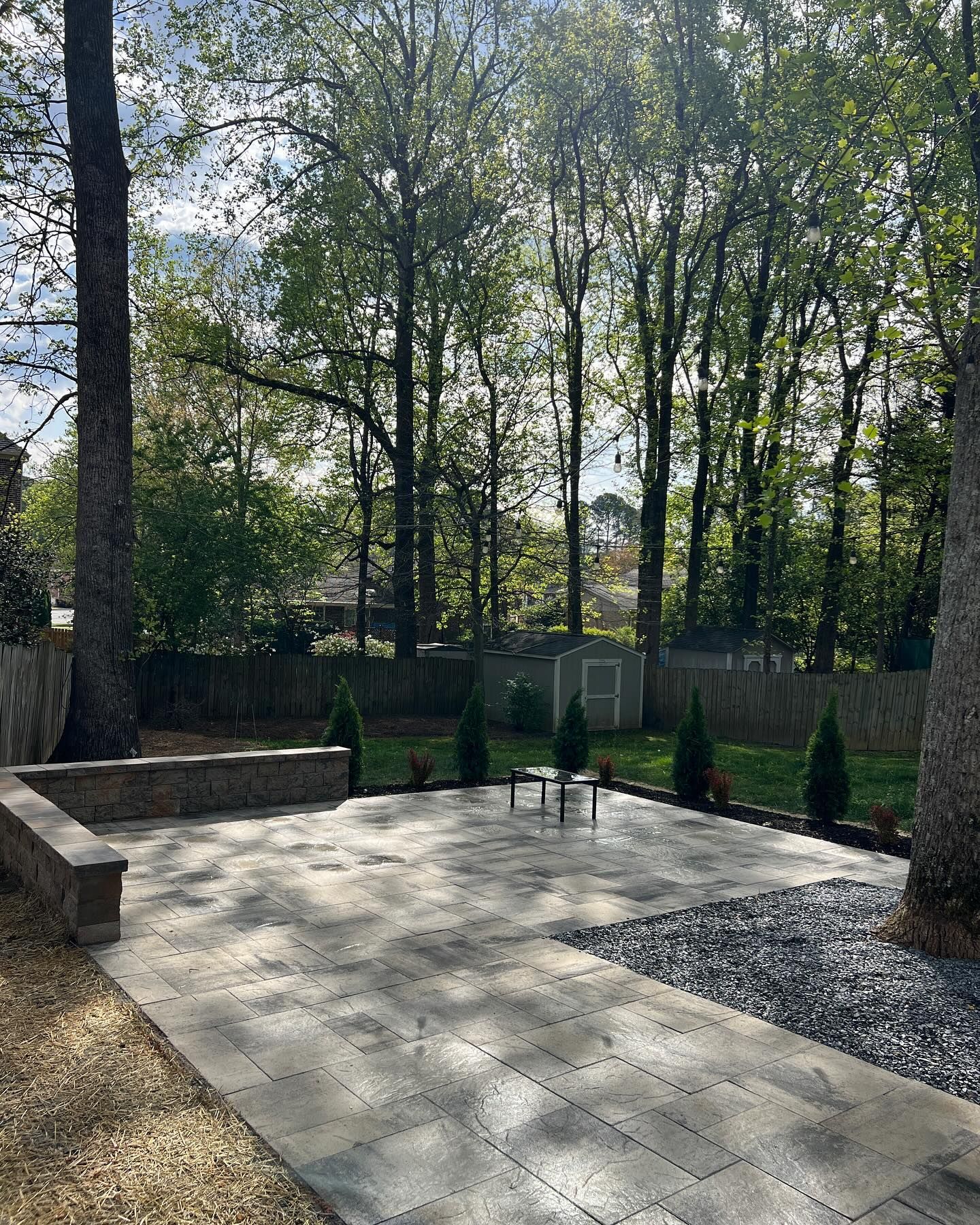
Interlocking pavers are individual units set into a compacted base with sand-filled joints between them. That segmented design is a big reason pavers tend to outlast a rigid slab on Georgia's red clay. Clay expands and contracts with moisture more than most soil types. But a paver system can flex slightly with that movement instead of cracking the way a solid surface would.


The tradeoff shows up at the joints. Standard sand washes out during heavy downpours, and once joints open up, individual pavers can start to shift or rock underfoot. Polymeric sand solves most of this, since it hardens after installation and resists erosion far better than loose sand, though it still needs occasional topping off in low corners where water tends to concentrate. Dense, properly sealed pavers also resist algae and mildew better than most homeowners expect, because sealing closes off the surface pores that would otherwise trap moisture and feed growth.


Heat is a separate matter. Darker paver colors soak up more sun and can get uncomfortably hot underfoot on a July afternoon, so color selection matters as much as material choice around a pool or anywhere kids run barefoot.


Stamped Concrete: Clean Lines, Higher Cracking Risk

Stamped concrete is poured as a single slab and textured to mimic stone or brick before it cures. You get a smooth, joint-free surface with none of the sand-topping pavers require. That's the appeal. The catch is that a monolithic slab has nowhere to go when the ground beneath it shifts, so it depends almost entirely on how well the base was prepared and how the control joints were laid out.

Control joints get cut into the slab specifically so cracks happen along a planned line instead of appearing randomly across the surface. Skip that step, or space the joints too far apart, and Georgia's clay combined with a heavy rain event is exactly the kind of ground movement that finds a slab's weakest point. Humidity adds a second layer of risk: moisture trapped under a poorly sealed surface can work against the color layer and the finish over time, so resealing on a consistent schedule isn't optional the way it might be with plain, unfinished concrete.


Slip resistance is worth flagging too. A sealed stamped surface can get slick when wet unless slip-resistant additives or a textured finish were requested at installation. Around a pool deck or anywhere water tends to pool, that detail changes the whole equation.


Natural Stone: The Longest Lifespan, With Conditions

Flagstone, slate, and bluestone bring a texture and depth that manufactured materials still can't fully replicate. A well-installed natural stone patio can outlast both pavers and stamped concrete by a wide margin. The variable is porosity, and not every natural stone behaves the same way once it's soaking up Georgia's humidity for a full season.


Some stones drink water like a sponge. Others barely notice it.

Denser stones like bluestone and slate absorb less water, which means less staining and slower algae growth in the shaded, humid corners of a yard. More porous stones need more frequent sealing to keep moisture and biological growth from taking hold, particularly in spots that don't get much direct sun. Texture does double duty here too. The same rough, cleft surface that gives natural stone its character is what makes it grip well underfoot when it's wet, which is a real advantage over a smooth, sealed finish.


The honest tradeoff with natural stone is the sealing commitment. It isn't a one-and-done material. Depending on the stone type and how much shade and moisture the site holds, plan on a sealing cycle every one to two years to keep staining and growth from creeping in.

Comparing the Three Side by Side

Durability against clay movement

Pavers flex with ground movement; stamped concrete depends on joint planning to avoid cracking; natural stone holds up well but individual stones can shift if the base wasn't compacted properly.


Humidity and moisture resistance

Dense pavers and low-porosity natural stone such as bluestone or slate resist algae and staining best; stamped concrete needs consistent sealing to keep moisture from undermining the finish; porous natural stone needs the most frequent attention.


Heat underfoot

Lighter colors across all three materials stay cooler; darker pavers and darker stamped concrete finishes retain more heat than most homeowners expect near a pool.


Slip resistance when wet

Textured natural stone and textured paver finishes outperform a smooth, sealed stamped concrete surface, which is why finish selection matters as much as material choice for pool surrounds.


Repair approach

Pavers can be lifted and replaced individually; a cracked stamped concrete slab typically needs patching or a full resurfacing; a cracked or stained piece of natural stone can often be swapped without disturbing the surrounding patio.


Many outdoor living designs blend these materials on purpose rather than committing the whole patio to one. A stone border framing a paver field, or a stamped concrete walkway leading into a paver patio, is a common way to combine the strengths of each without covering the entire footprint in the higher-upkeep option.

Tip: Walk your property after the next hard rain before locking in a material. Watch where water pools, which corners stay shaded the longest into the afternoon, and where the sun hits hardest. That fifteen-minute observation tells you more about which surface will hold up on your specific lot than any spec sheet or sample board will.

Where the Real Failures Come From

Choosing the right material only solves part of the equation. How that material gets installed underneath the surface decides whether it lasts fifteen years or needs repair after two.

Warning: Cutting corners on base preparation is where every one of these materials fails early, regardless of which one you pick. A compacted gravel base and correct grading away from the house matter more than the surface finish itself. Skip that step to save time, and you're looking at sinking pavers, cracked concrete, or shifting stone within a season or two, no matter how premium the material looked on install day.

That's why planning grading, base depth, and drainage around the specific material matters more than the material name on its own. A paver system on a shallow, poorly compacted base will fail faster than a well-built stamped concrete slab, and a rushed slab will crack faster than a properly bedded paver system. Material choice gets the attention. Installation quality decides the outcome.

Matching the Material to How You'll Use the Space

The right choice usually comes down to how the patio gets used and how much shade or sun it sits in, more than personal taste alone.


High-Traffic Family Patios

Spaces that see daily foot traffic, furniture dragging across the surface, and kids running through benefit from pavers or dense natural stone. Both hold up to repeated wear, and both allow spot repairs without redoing the whole surface if one section takes damage.


Pool Decks and Wet-Feet Zones

Slip resistance should drive this decision more than appearance. Textured pavers or textured natural stone consistently outperform smooth stamped concrete around water, unless the concrete was finished with slip-resistant additives specifically for that purpose.


Shaded, Low-Sun Corners

Shaded areas hold moisture longer, which speeds up algae growth on porous surfaces. Dense pavers or low-porosity stone like bluestone or slate handle shade better than a highly porous stone that needs sealing more often just to keep pace with the moisture.


Design-Forward Outdoor Living Spaces

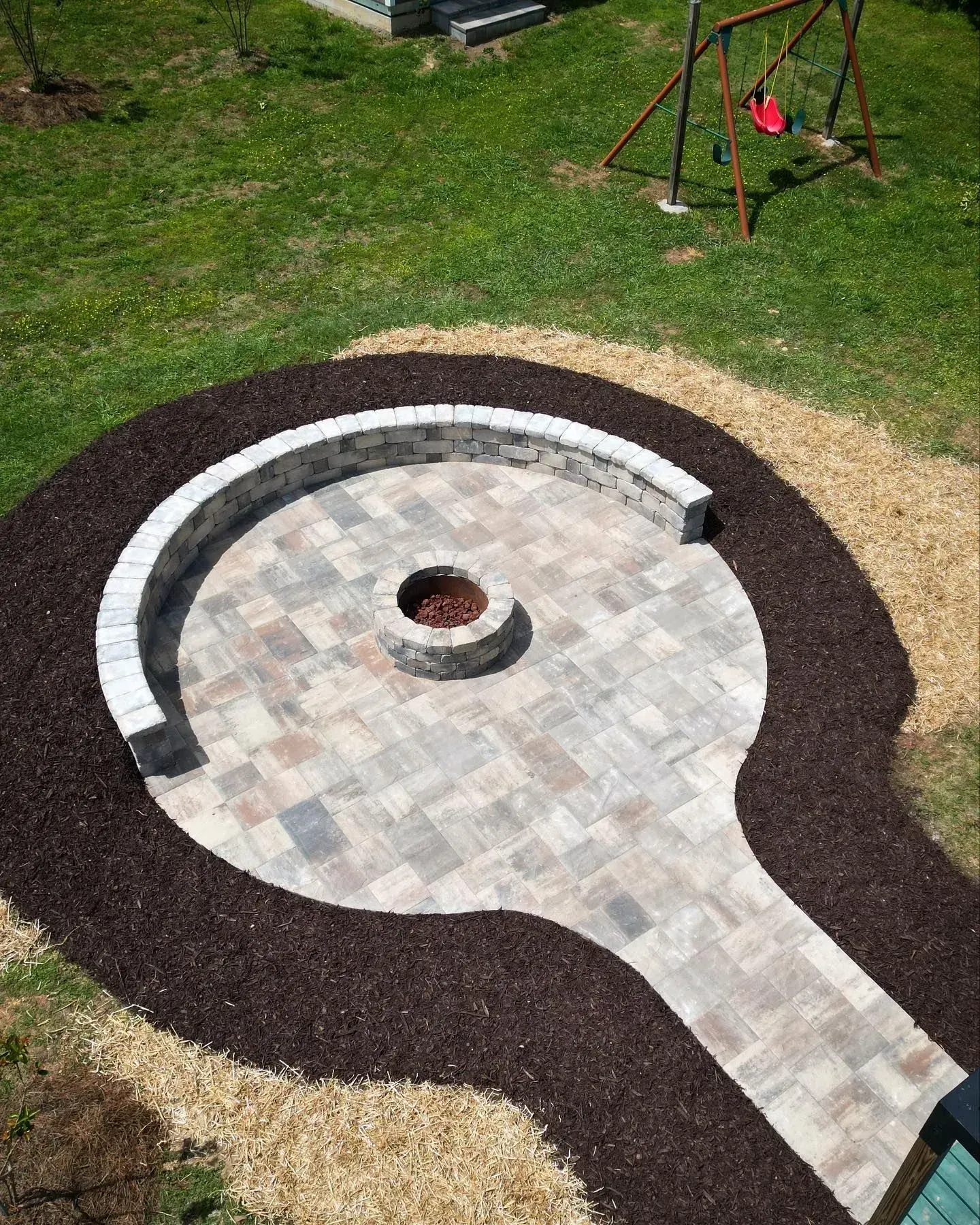
If the patio connects to an outdoor kitchen or a fire feature and visual impact matters most, natural stone or a stamped concrete finish that mimics stone both deliver. The deciding factor at that point becomes how much ongoing sealing you're willing to commit to for that look.

Frequently Asked Questions

  • Does one of these three materials need the least maintenance overall?

    Dense, properly sealed pavers tend to need the least attention, since joints are the main variable and modern polymeric sand closes most of that gap. Stamped concrete and stone need consistent sealing.

  • Can these materials be mixed in one patio design?

    Yes, and it's common in Georgia outdoor living projects. A stone border framing a paver field, or a stamped path connecting to pavers, gets the visual benefit without the higher-maintenance material everywhere.

  • Does the direction a patio faces change which material makes sense?

    It can. Patios in full afternoon sun deal with more heat retention and UV fading, favoring lighter colors. Shaded patios hold moisture longer, favoring denser, lower-porosity materials that resist algae.

  • Will red clay soil affect all three materials the same way?

    No. Clay's expansion and contraction affects a rigid stamped concrete slab more noticeably than pavers or individually set stone, which is why base preparation matters even more under a poured surface.

Choosing With Your Actual Yard in Mind

There isn't a single right answer among pavers, stamped concrete, and natural stone, only the right answer for how your specific yard drains, how much sun your patio gets, and how much ongoing sealing or joint maintenance you're realistic about keeping up with. Georgia's rain, heat, and clay soil don't forgive shortcuts, and the difference between a patio that still looks sharp after fifteen years and one that needs early repairs almost always traces back to base prep and drainage working with the material, not against it.


With 20 years of experience, Zamora Design and Build Kennesaw, GA properties to read how water actually moves across the site before weighing pavers, stamped concrete, and natural stone against a family's specific drainage, sun exposure, and daily use. That groundwork is what separates a patio chosen for a photo from one built to hold up on the actual lot it sits on, season after season.

Backyard with green lawn, tall trees, and a small tan shed beside a dirt path
July 3, 2026
Struggling with grass growth on your shady or sloped lot? Explore effective landscaping solutions like shade-tolerant ground covers today!
Modern outdoor lounge with white sectional seating, fire pit, pergola, and landscaped garden patio.
June 5, 2026
Outdoor living has evolved far beyond a simple patio or backyard deck. Today’s homeowners are transforming outdoor spaces into luxurious extensions of their homes, creating environments that blend comfort, entertainment, functionality, and natural beauty.
Modern backyard patio with pergola, seating, fire pit, and purple flowers by a wooden fence
May 4, 2026
Landscaping is more than planting flowers and maintaining a lush lawn; it’s about creating a harmonious outdoor space that balances aesthetics, functionality, and durability. Hardscapes—permanent or semi-permanent structural elements—play a crucial role in this balance,